
Why Access Reviews Matter More Than People Think?
Many organisations invest heavily in advanced cybersecurity tools, yet they frequently overlook one of the simplest security controls: regular access reviews. Over time, as employees shift roles and external contractors conclude their work, unmonitored privileges accumulate, leaving dormant or excessive permissions open. Technology and identity management systems alone cannot mitigate this risk; proactive governance is essential to constantly evaluate not just who holds access, but whether that access remains appropriate.
· 2 min read

Many organisations invest heavily in cybersecurity tools, yet one of the simplest security controls is often overlooked: regular access reviews.
Access reviews are not just an audit exercise. They are a critical defence against risk.
Over time, employees change roles, vendors complete projects, and contractors leave. Without periodic reviews, access privileges accumulate, creating unnecessary security exposure. A single inactive account or excessive permission can become an entry point for a breach.
Regular access reviews help organisations:
- Ensure employees have only the access they need to perform their jobs
- Remove dormant, orphaned, or excessive privileges
- Strengthen compliance with regulatory and audit requirements
- Reduce insider threat risks, whether intentional or accidental
- Improve accountability across business and IT teams
One common misconception is that identity management systems automatically solve the problem. In reality, technology can assign and track access, but organisations still need governance processes to validate whether access remains appropriate.
The question is not, "Who has access today?"
The more important question is, "Should they still have it?"
Effective access reviews transform security from a reactive activity into a proactive risk-management practice. They help organisations maintain the principle of least privilege, improve operational discipline, and significantly reduce the attack surface.
In cybersecurity, it's often the permissions nobody notices that create the biggest vulnerabilities.
- ITGovernance
- Cybersecurity
- RiskManagement
- IdentityManagement
- AccessReview
- Governance
- InformationSecurity
- IAM
- Compliance
- CyberRisk
Share
Keep reading
Related articles
· 1 min read
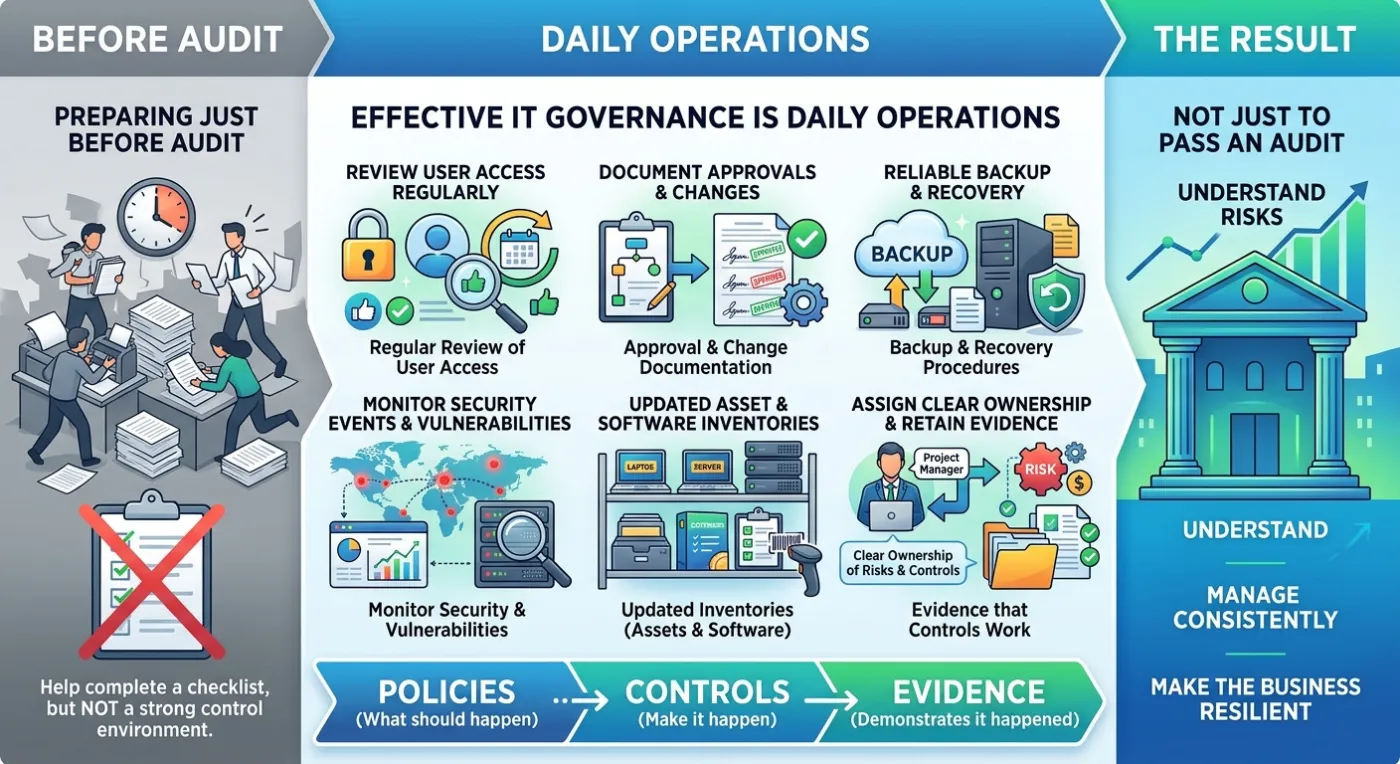
An Audit-Ready Organization Is Built Every Day, Not One Week Before the Audit
Effective IT governance is woven into the fabric of daily operations rather than assembled in a frantic scramble right before an audit. True control environments are built through consistent practices—such as regular user access reviews, meticulous approval documentation, reliable backup procedures, and clear risk ownership—transforming governance from a compliance checklist into an engine for operational resilience.
Cybersecurity & Governance
· 2 min read
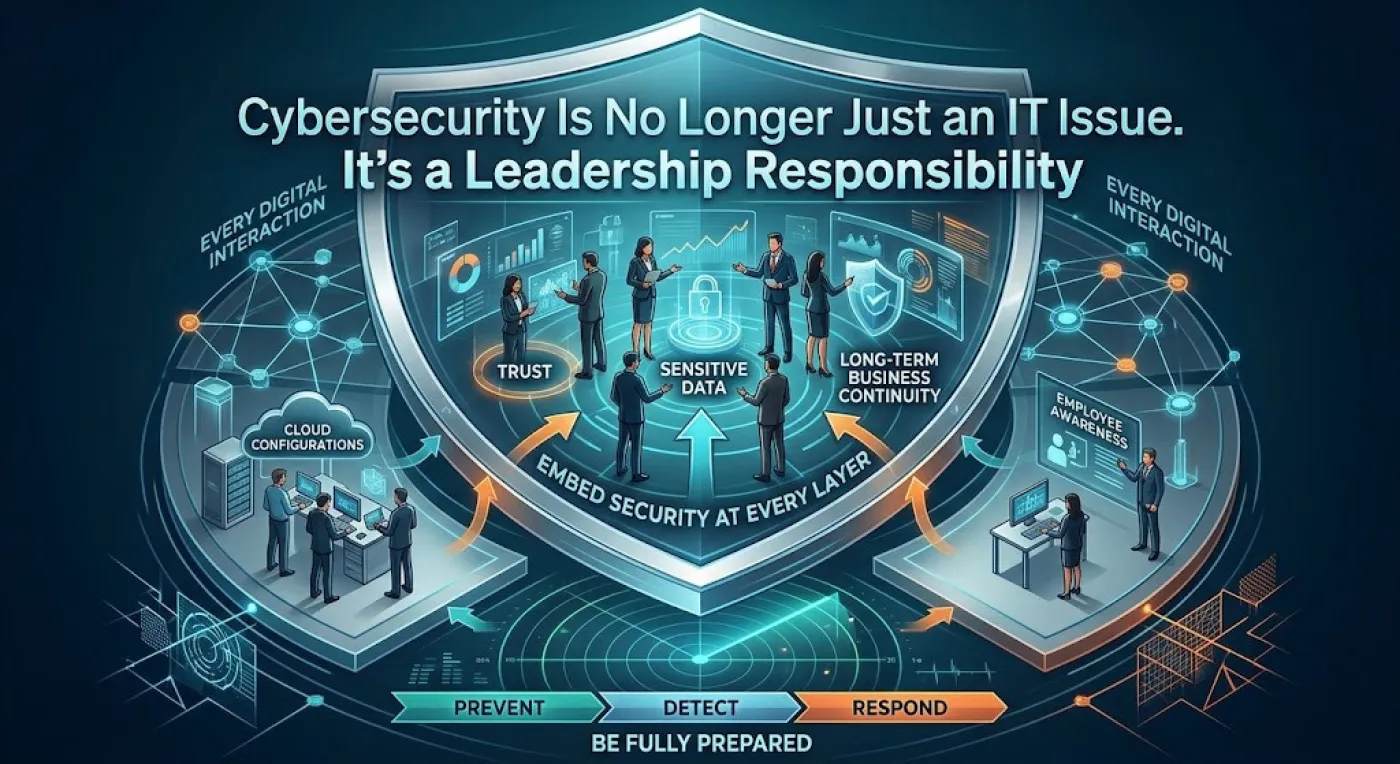
Cybersecurity Is No Longer Just an IT Issue. It’s a Leadership Responsibility
For modern organizations, cybersecurity is no longer just about keeping systems operational—it is about protecting trust, sensitive data, and long-term business continuity. Because every digital interaction introduces potential privacy risks, enterprises must embed security into every layer of their operations, from cloud configurations to employee awareness. The fundamental challenge for IT leaders is not predicting if a cyber threat will occur, but ensuring the organization is fully prepared to prevent, detect, and respond when it does.
Cybersecurity & Governance
· 5 min read
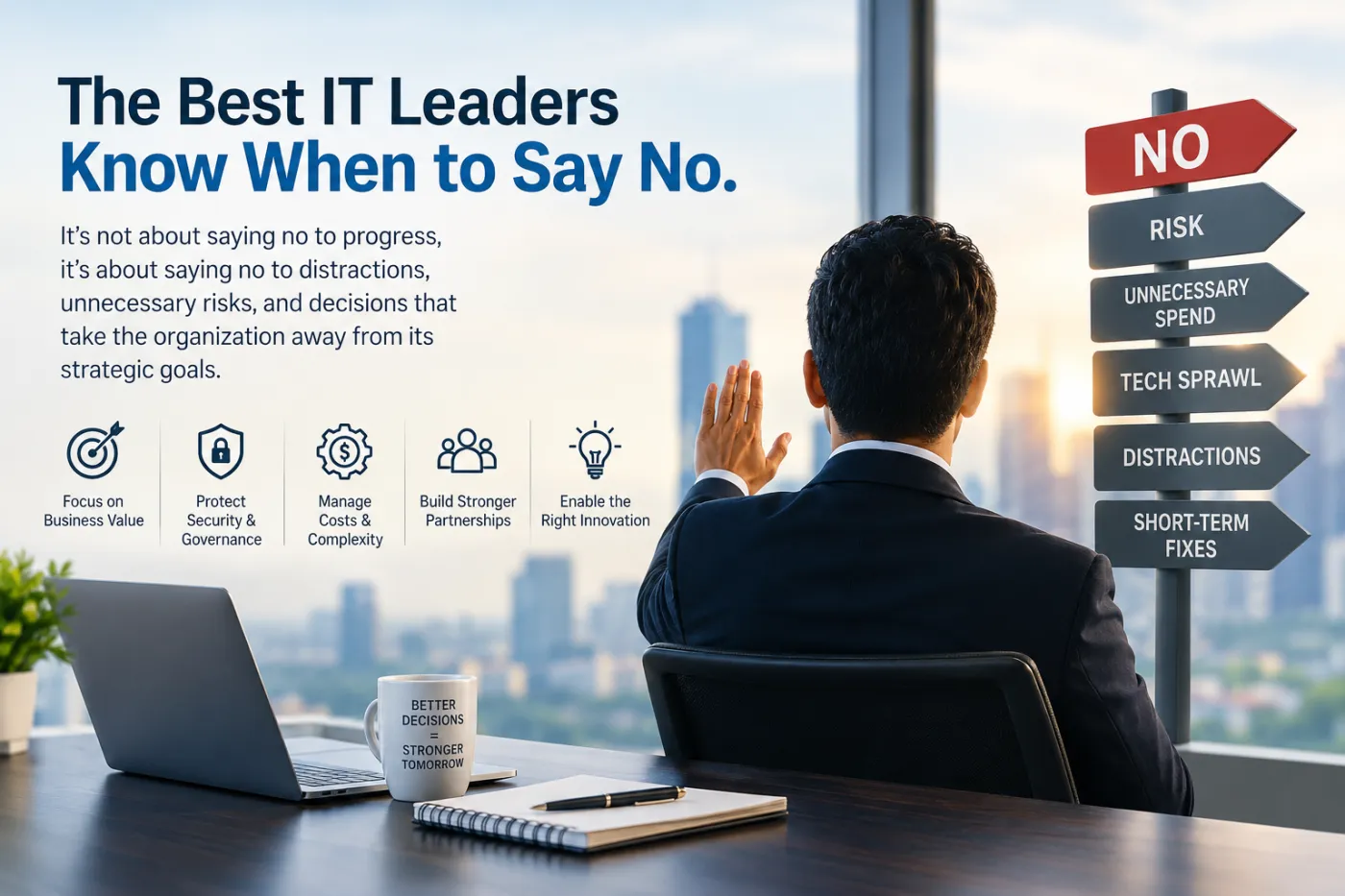
The Best IT Leaders Know When to Say No
The best IT leaders know that saying yes to everything is not effective leadership. True leadership means prioritizing business value, managing risks, and allocating resources strategically. Sometimes, the most valuable decision is to decline another request to protect the organization's long-term goals. Great IT leaders don't just enable technology; they make technology decisions that drive business success.
IT leadership