
Cybersecurity Is No Longer Just an IT Issue. It’s a Leadership Responsibility
For modern organizations, cybersecurity is no longer just about keeping systems operational—it is about protecting trust, sensitive data, and long-term business continuity. Because every digital interaction introduces potential privacy risks, enterprises must embed security into every layer of their operations, from cloud configurations to employee awareness. The fundamental challenge for IT leaders is not predicting if a cyber threat will occur, but ensuring the organization is fully prepared to prevent, detect, and respond when it does.
· 2 min read

In today's digital world, every online interaction can leave a digital footprint. Personal information, location data, user behavior, and publicly shared business details can expose individuals and organizations to privacy risks and cyber threats.
For modern enterprises, protecting digital assets requires more than installing antivirus software or using strong passwords.
It requires a security-first approach to technology.
Here are five priorities every organization should consider:
Data Privacy: Protect sensitive information and limit unnecessary data exposure.
Secure Software Development: Build security into applications from the design stage, not as an afterthought.
Zero-Trust Architecture: Verify every access request and enforce least-privilege access.
Cloud Security: Protect enterprise infrastructure through appropriate identity controls, encryption, monitoring, and secure configurations.
Governance & Accountability: Establish clear security policies, assign ownership, and regularly test controls.
Technology alone cannot guarantee security. Strong governance, employee awareness, continuous monitoring, and a well-tested incident response plan are equally important.
As IT leaders, our responsibility is not simply to keep systems running. It is to protect the trust, data, and business continuity that those systems support.
The real question is not whether your organization will face a cyber threat, but how prepared it is to prevent, detect, and respond to one.
How is your organization strengthening cybersecurity and protecting critical business data?
Share
Keep reading
Related articles
· 1 min read
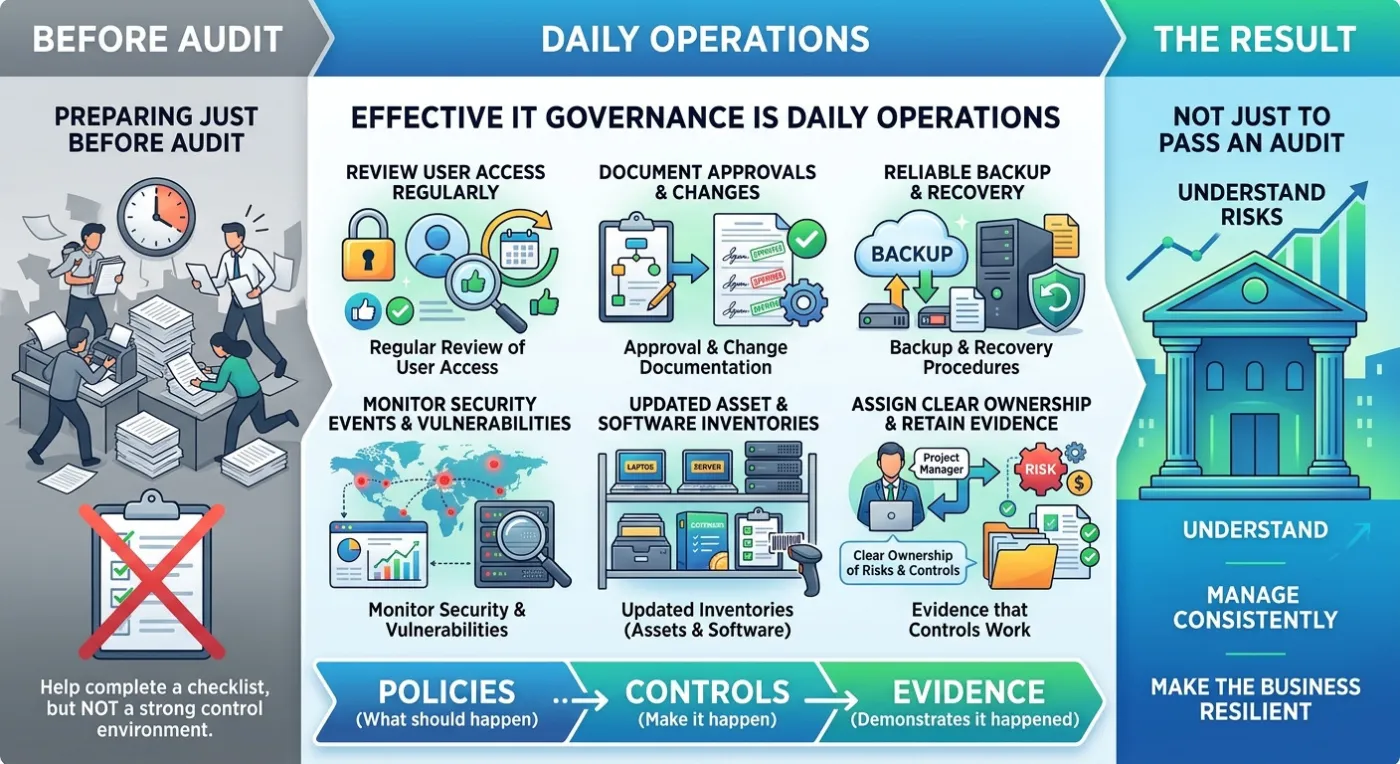
An Audit-Ready Organization Is Built Every Day, Not One Week Before the Audit
Effective IT governance is woven into the fabric of daily operations rather than assembled in a frantic scramble right before an audit. True control environments are built through consistent practices—such as regular user access reviews, meticulous approval documentation, reliable backup procedures, and clear risk ownership—transforming governance from a compliance checklist into an engine for operational resilience.
Cybersecurity & Governance
· 1 min read
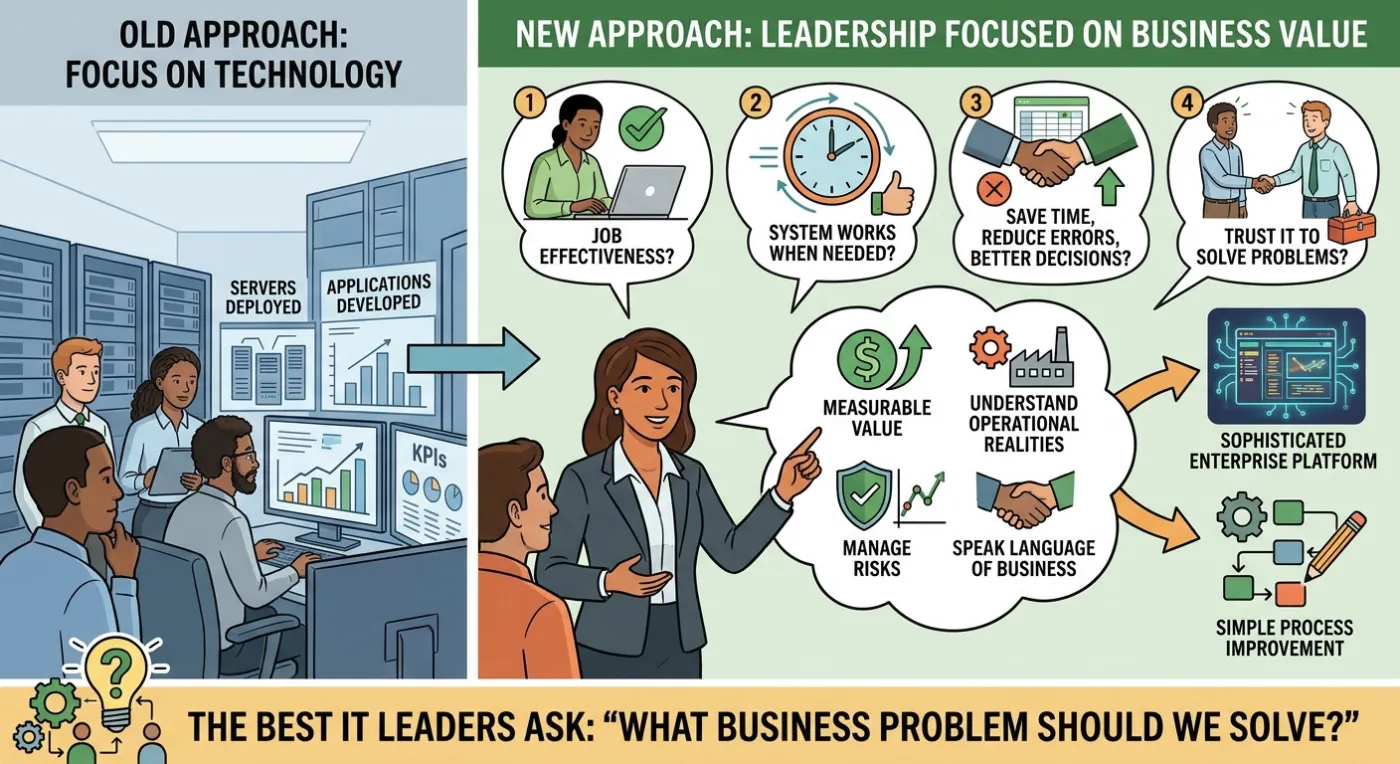
Managing IT in a Non-Technical Organization Requires a Different Kind of Leadership
When technology is not the company's core business, employees don't measure IT success by the number of servers deployed or applications developed. They measure it by something much simpler: Can they do their jobs effectively? Does the system work when they need it? Does technology help them save time, reduce errors, and make better decisions? Can they trust IT to solve problems?
IT leadership
· 1 min read
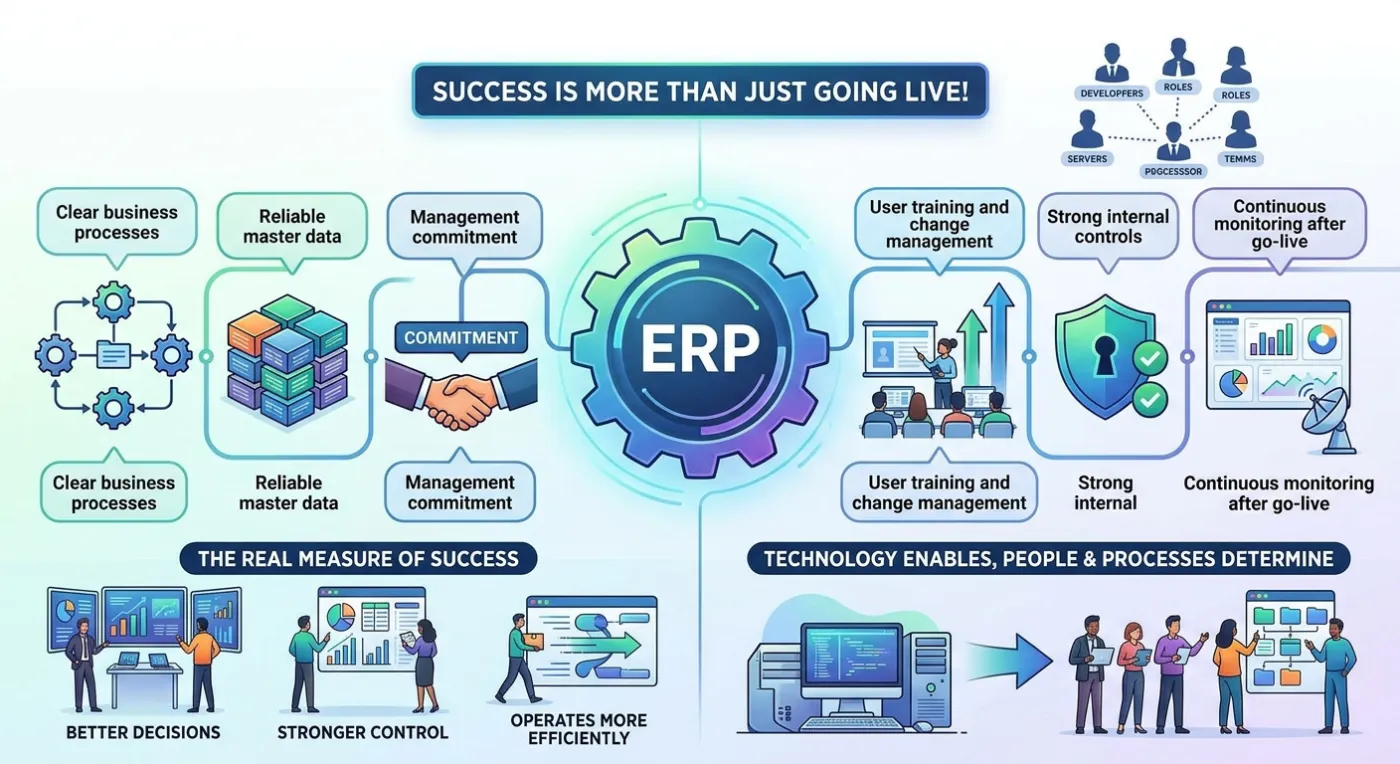
ERP Implementation Is Not an IT Project. It Is a Business Transformation
Going live is not the goal—business transformation is. A truly successful ERP implementation isn’t defined by software installation, but by clear processes, reliable data, and driving smarter decision-making across the organization.
ERP & Business Applications