
The Best IT Leaders Know When to Say No
The best IT leaders know that saying yes to everything is not effective leadership. True leadership means prioritizing business value, managing risks, and allocating resources strategically. Sometimes, the most valuable decision is to decline another request to protect the organization's long-term goals. Great IT leaders don't just enable technology; they make technology decisions that drive business success.
· 5 min read

True IT leadership is not about saying yes to every request. It is about making the right decisions for the business, even when they're difficult.
In today's fast-paced digital environment, IT leaders face constant pressure to deliver more, move faster, reduce costs, and adopt emerging technologies. Business executives want immediate solutions, departments request new applications, and vendors promise transformative results. Every request may appear important, but not every request deserves immediate approval.
This is where effective IT leadership makes a difference.
The best IT leaders understand that saying yes to everything is not a sign of strong leadership; it can be a sign of weak prioritization.
1. They Prioritize Business Value Over Popularity
An IT department is not a service desk for every idea that comes along. It is a strategic business function responsible for enabling growth, improving productivity, protecting information, and supporting long-term organizational objectives.
When a new request arrives, experienced IT leaders ask a few fundamental questions:
-
Does this support our business strategy?
-
Will it deliver measurable value?
-
Is it more important than our existing priorities?
-
Do we have the resources to execute it properly?
If the answers do not justify the investment, saying no—or not now—is a responsible decision.
The objective is not to reject ideas. It is to ensure that time, budget, and talent are invested where they create the greatest impact.
2. They Protect Security and Governance
Convenience often competes with security. Employees may request unauthorized software, departments may prefer unmanaged cloud services, and business teams may seek exceptions to established IT policies to meet urgent deadlines.
A good IT leader understands that a small shortcut today can become a significant business risk tomorrow.
Cybersecurity, data privacy, access control, regulatory compliance, and disaster recovery cannot be compromised simply because an alternative seems faster or easier.
A responsible IT leader knows that protecting the organization sometimes requires an uncomfortable conversation.
Saying no to an insecure solution is not creating a barrier to business. It is protecting business continuity, reputation, and stakeholder trust.
3. They Understand the Cost of Saying Yes
Every new application, integration, infrastructure change, or technology initiative carries a cost beyond its initial purchase price.
There are implementation expenses, licensing fees, integration requirements, maintenance obligations, security considerations, training needs, and ongoing support responsibilities.
Approving every request can create technology sprawl, duplicate systems, unnecessary complexity, and technical debt.
Strong IT leaders evaluate the total cost of ownership rather than focusing only on the immediate requirement.
Sometimes, the best decision is to improve an existing system instead of introducing another one. Sometimes, standardization creates more value than customization. And sometimes, doing nothing is better than investing in a solution that does not solve a meaningful business problem.
4. They Say No Without Damaging Relationships
Leadership is not about using authority to shut down conversations. It is about explaining decisions in a way that builds understanding and trust.
Instead of saying, "No, IT cannot do that," effective leaders explain the business reasons behind their decisions.
For example:
-
Instead of: "We cannot implement this now."
Say: "We can evaluate this initiative in the next planning cycle after completing our current business-critical priorities."
-
Instead of: "That solution is not secure."
Say: "This approach introduces unacceptable security risks. Let's identify an alternative that meets the business requirement while protecting our data."
-
Instead of: "There is no budget for this."
Say: "Let's assess the expected return and compare it with our existing investments before committing resources."
The difference is significant. One approach creates resistance; the other encourages collaboration.
5. They Know When to Say Yes
Knowing when to say no is only half of the equation. Effective IT leaders must also recognize when to challenge existing processes, embrace innovation, and take calculated risks.
A culture of constant rejection can be just as damaging as a culture of automatic approval.
The goal is not to slow the business down. It is to help the business move in the right direction, with the right priorities and appropriate safeguards.
The best leaders distinguish between unnecessary complexity and genuine innovation, between avoidable risk and calculated risk, and between a low-value request and an opportunity that could create a competitive advantage.
They do not simply reject problems. They help find better solutions.
6. They Build a Culture of Strategic Decision-Making
When IT leaders consistently communicate priorities, establish transparent governance, and measure business outcomes, stakeholders begin to understand that technology decisions must be based on value, risk, and organizational capacity.
This creates a healthier relationship between IT and the business.
Instead of treating IT as a department that either approves or rejects requests, the organization begins to recognize IT as a strategic partner that helps determine which investments matter most.
Over time, this approach improves resource allocation, strengthens accountability, reduces unnecessary spending, and increases confidence in technology leadership.
Final Thoughts
The real measure of an IT leader is not the number of projects approved, applications deployed, or requests fulfilled. It is the business value created through the decisions they make.
Sometimes leadership means accelerating digital transformation. Sometimes it means challenging an expensive proposal. Sometimes it means protecting the organization from unnecessary risk.
And sometimes, it means having the confidence to say no—even when saying yes would be easier.
Because great IT leadership is not about pleasing everyone. It is about making decisions that serve the organization, protect its future, and create sustainable business value.
The strongest IT leaders do not say no to progress. They say no to distractions, unnecessary risks, and decisions that take the organization away from its strategic goals.
Share
Keep reading
Related articles
· 2 min read
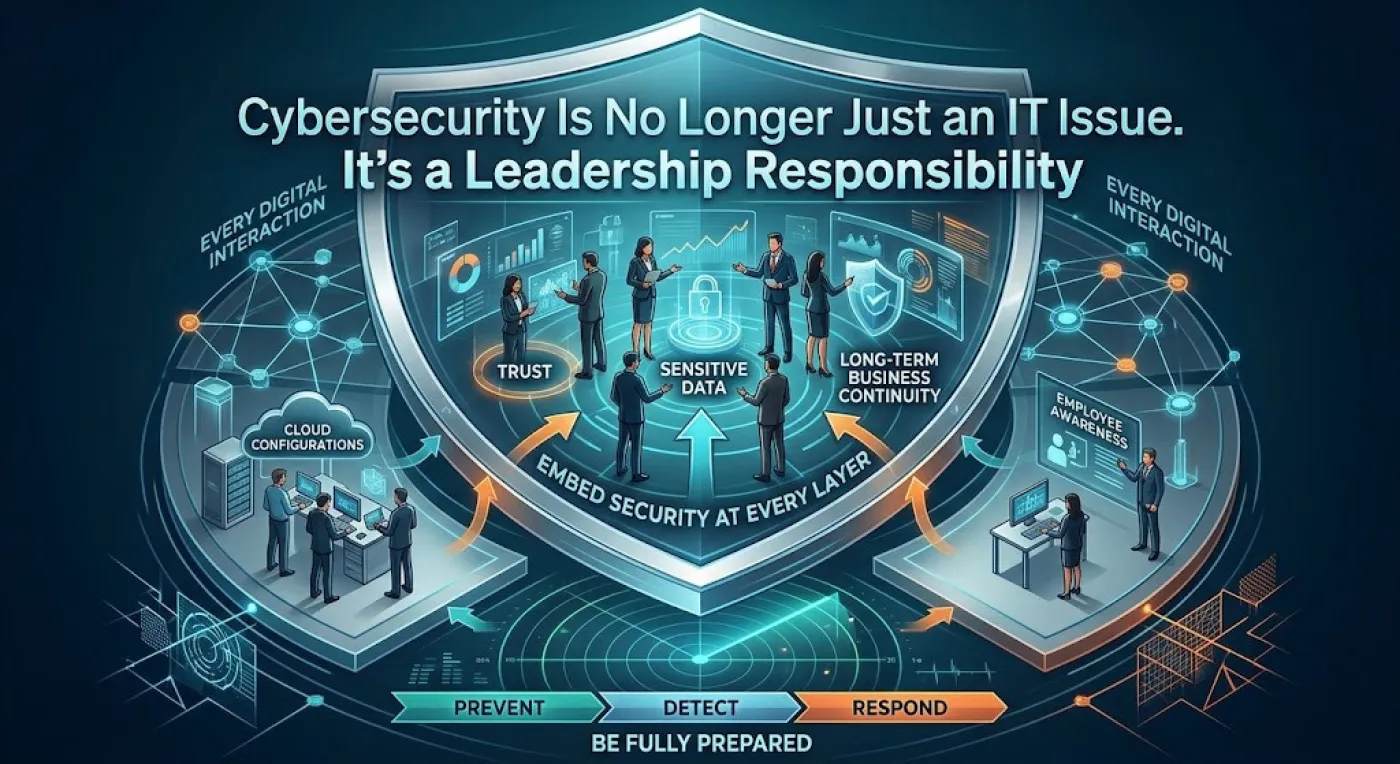
Cybersecurity Is No Longer Just an IT Issue. It’s a Leadership Responsibility
For modern organizations, cybersecurity is no longer just about keeping systems operational—it is about protecting trust, sensitive data, and long-term business continuity. Because every digital interaction introduces potential privacy risks, enterprises must embed security into every layer of their operations, from cloud configurations to employee awareness. The fundamental challenge for IT leaders is not predicting if a cyber threat will occur, but ensuring the organization is fully prepared to prevent, detect, and respond when it does.
Cybersecurity & Governance
· 1 min read
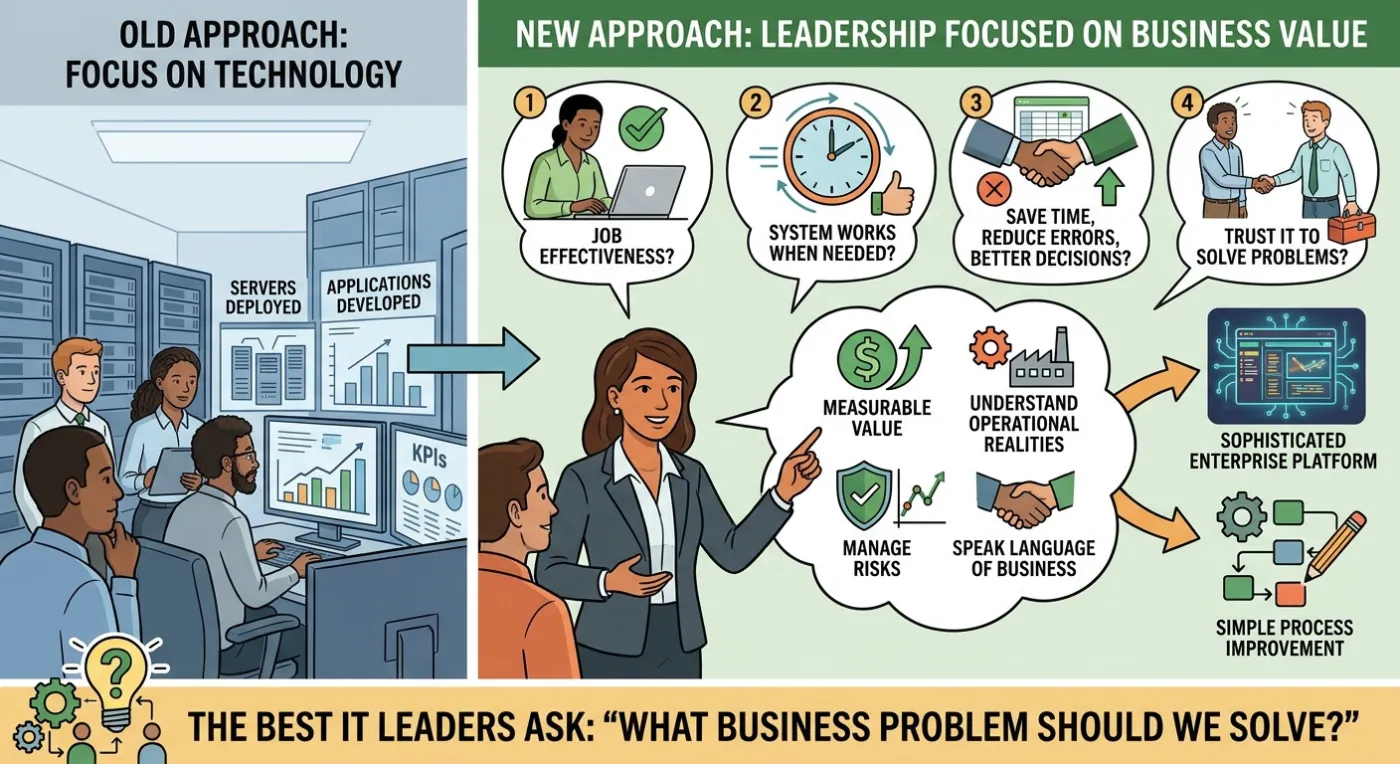
Managing IT in a Non-Technical Organization Requires a Different Kind of Leadership
When technology is not the company's core business, employees don't measure IT success by the number of servers deployed or applications developed. They measure it by something much simpler: Can they do their jobs effectively? Does the system work when they need it? Does technology help them save time, reduce errors, and make better decisions? Can they trust IT to solve problems?
IT leadership
· 1 min read
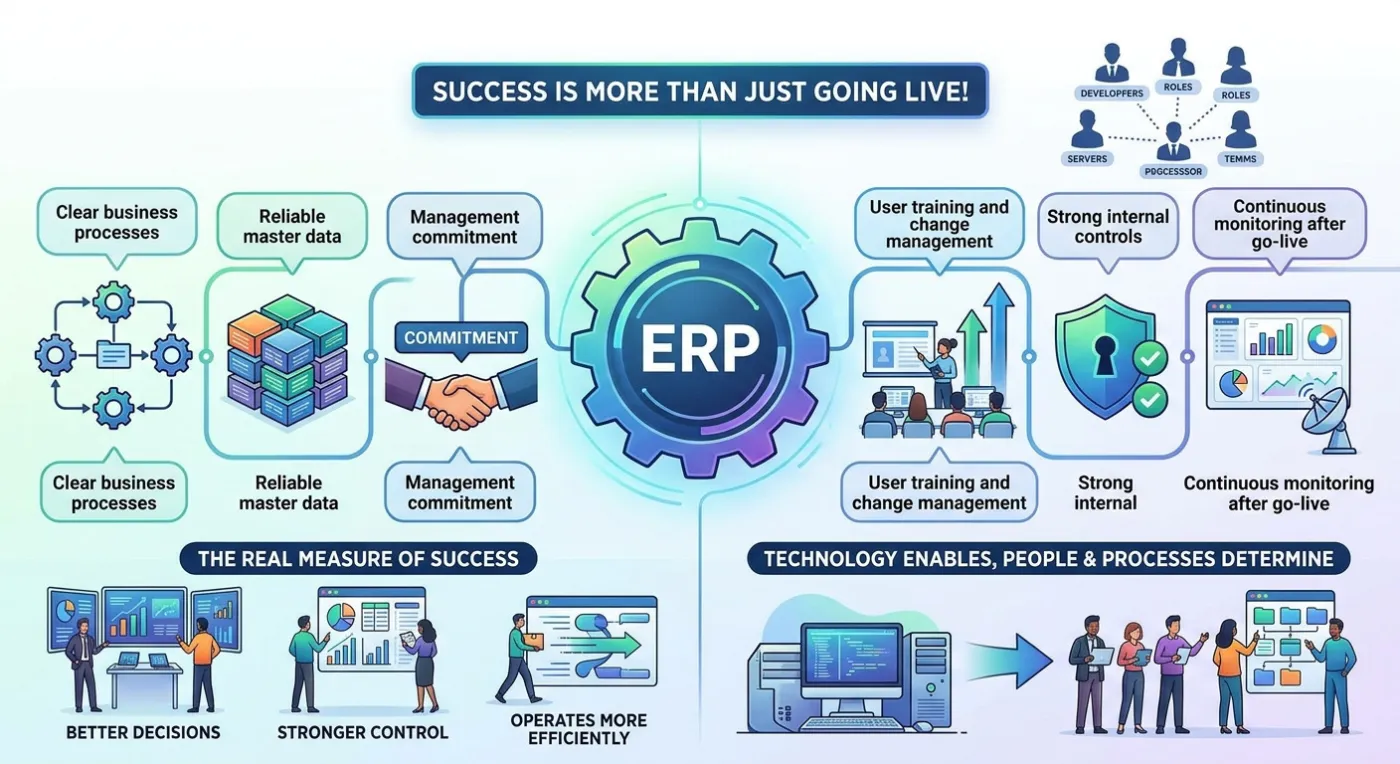
ERP Implementation Is Not an IT Project. It Is a Business Transformation
Going live is not the goal—business transformation is. A truly successful ERP implementation isn’t defined by software installation, but by clear processes, reliable data, and driving smarter decision-making across the organization.
ERP & Business Applications