MCP vs API: How Does MCP Work With an API?
MCP (Model Context Protocol) and APIs work together to connect AI applications with external systems. While APIs enable software-to-software communication, MCP provides a standardized way for AI applications to discover and use tools, access data, and execute actions through existing APIs. Learn how MCP and APIs power AI-driven enterprise applications.
· 4 min read
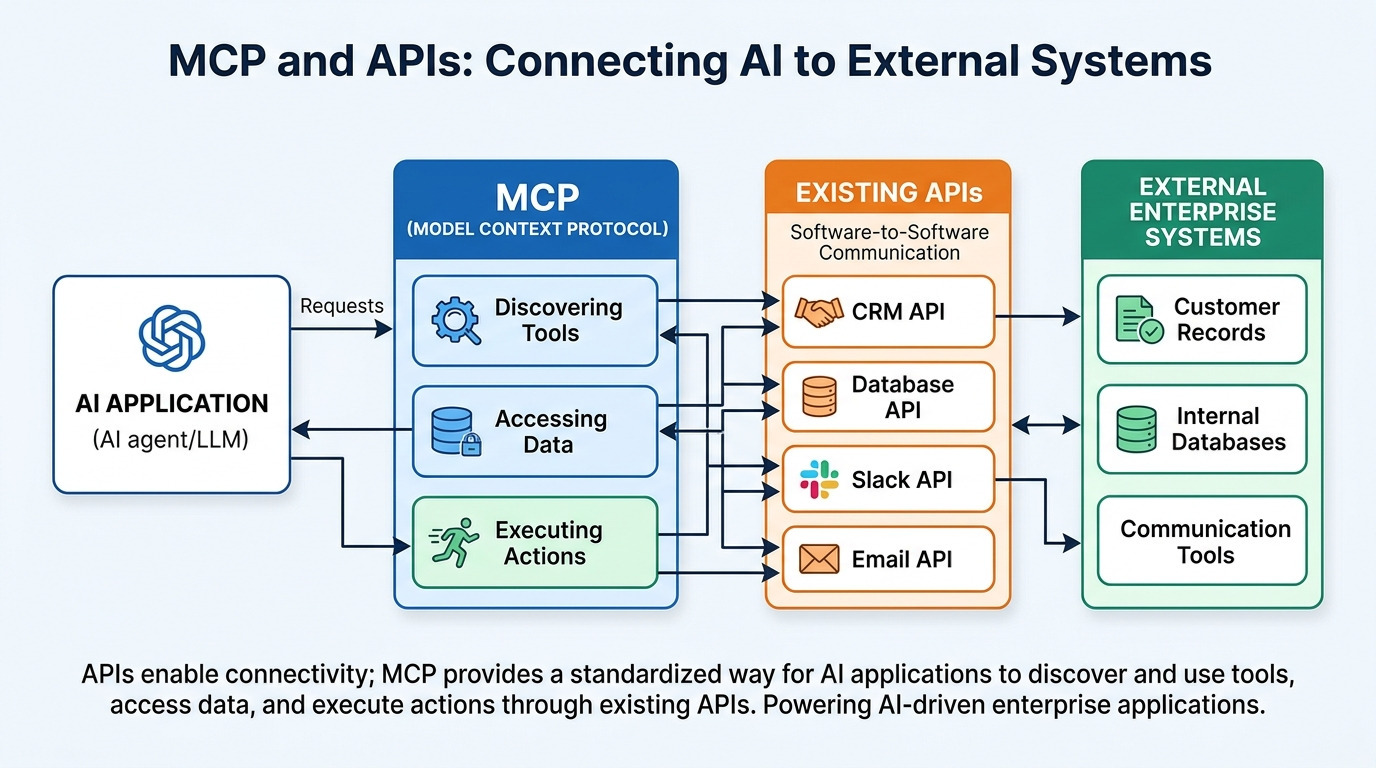
MCP vs API: How Does MCP Work With an API?
As AI-powered applications become more intelligent, understanding the difference between API and MCP (Model Context Protocol) is becoming increasingly important for software engineers, architects, and developers.
But are MCP and APIs competitors? Not really. They solve different problems and work even better together.
1. What Is an API?
An API (Application Programming Interface) allows two software systems to communicate with each other through predefined rules and endpoints.
For example, a Laravel application might use an API to:
-
Retrieve customer information from an ERP.
-
Create an invoice in an accounting system.
-
Fetch order status from an e-commerce platform.
-
Send messages through the WhatsApp Cloud API.
The application typically needs to know the API endpoints, authentication requirements, parameters, and response formats.
2. What Is MCP?
MCP (Model Context Protocol) is an open protocol that standardizes how AI applications connect to external tools, data sources, and services.
Instead of building a separate, custom integration for every AI application, developers can expose capabilities through an MCP server.
An MCP server can provide:
-
Tools: Actions an AI can request, such as checking an order or creating a ticket.
-
Resources: Data the AI application can access, such as documentation or customer records.
-
Prompts: Reusable prompt templates and workflows.
The AI model can discover available tools and decide which ones to request based on the user's question, subject to application controls and permissions.
3. How Does MCP Work With an API?
Imagine a user asks an AI assistant:
"Check the status of order #1025 and tell me whether it has been shipped."
Here is how the process can work:
Step 1: The user asks a question in an AI application.
Step 2: The AI application identifies an appropriate tool exposed by an MCP server, such as get_order_status.
Step 3: The MCP client sends a tool call to the MCP server.
Step 4: The MCP server calls the existing e-commerce API, passing the required order ID and authentication credentials.
Step 5: The API returns the order status to the MCP server.
Step 6: The MCP server returns the result through MCP to the AI application.
Step 7: The AI model explains the result in natural language.
For example: "Order #1025 has been shipped and is currently in transit."
The important point: MCP does not replace the API. It provides a standardized way for an AI application to discover and invoke capabilities that may be implemented using existing APIs.
4. MCP vs API: Key Differences
| Feature | API | MCP |
|---|---|---|
| Primary purpose | Software-to-software communication | Standardized AI-to-tool and context integration |
| Interface | Endpoints, methods, schemas | Tools, resources, prompts |
| Discovery | Often through API documentation | MCP capability discovery |
| Typical caller | Application or service | MCP client in an AI application |
| AI integration | Requires application-specific integration | Provides a common integration protocol |
| Can work without the other? | Yes | Yes, MCP servers can use APIs or other backends |
5. Real-World Example: Laravel + AI + ERP
Suppose you are building an AI assistant for an enterprise ERP using Laravel.
Your architecture could look like this:
User → AI Application → MCP Client → Laravel MCP Server → ERP REST API → Database
The Laravel MCP server exposes approved tools such as:
-
get_customer_details -
check_inventory -
get_invoice_status -
get_sales_summary
When a user asks, "How much inventory do we have for product X?", the AI can select the appropriate tool. The MCP server validates the request and retrieves the data through the ERP API.
The AI then presents the result in a conversational format.
You can also build an MCP server that accesses Laravel services or databases directly when appropriate. An API is not mandatory for every MCP integration.
6. Does MCP Make an Application Automatically AI-Powered?
No. MCP standardizes the connection, but it does not provide the entire AI system.
You still need:
-
An AI model and an application that orchestrates tool calls.
-
An MCP client and server.
-
Business logic and data integrations.
-
Authentication, authorization, and permission checks.
-
Input validation, logging, monitoring, and error handling.
For sensitive actions such as creating payments, approving purchase orders, or modifying financial records, additional authorization and human approval may be necessary.
Final Takeaway
Think of an API as the interface that lets software access a service, while MCP is a standardized protocol that helps AI applications discover and use tools and context.
APIs enable integration. MCP makes those integrations more accessible to AI applications.
For developers building the next generation of enterprise software, understanding both technologies will be increasingly valuable.
- Laravel
- SoftwareArchitecture
- ArtificialIntelligence
- AIEngineering
- MCP
- AP
- #ModelContextProtocol
- GenerativeAI
- DigitalTransformation
Share
Keep reading
Related articles
· 1 min read
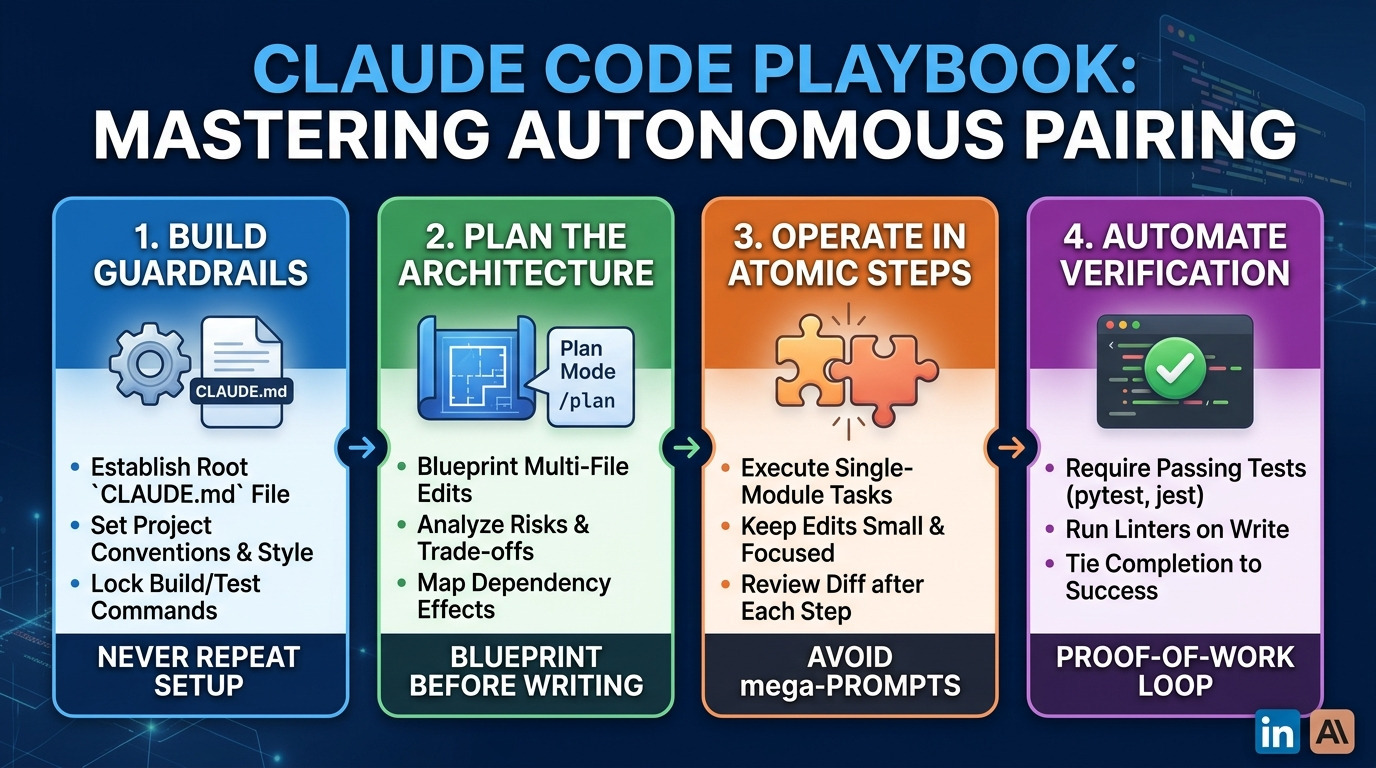
Stop using Claude Code like a basic chat terminal
Most developers use Claude Code like a chat window with terminal access. The top 1% use it like an autonomous pairing partner. Here is the 4-step playbook to stop prompt-and-pray coding and start shipping production features safely.
AI & Emerging Tech
· 2 min read
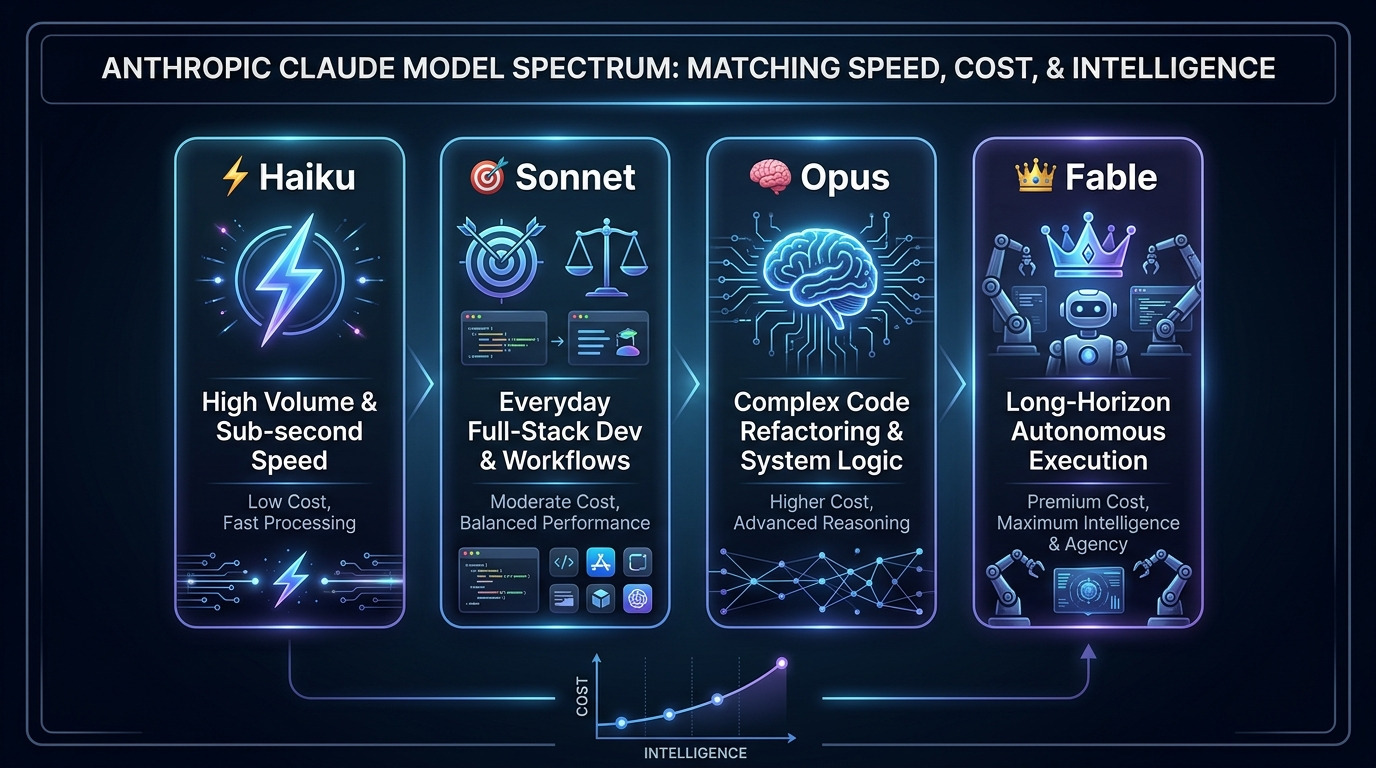
Stop Overpaying for AI: How to Choose the Right Claude Model for the Job
Choosing the right AI model isn't about using the most powerful one—it's about matching task complexity to processing speed and cost. Anthropic’s Claude lineup (Haiku, Sonnet, Opus, and Fable) provides a clear framework for balancing ultra-fast micro-tasks, everyday full-stack development, and complex, autonomous agentic reasoning.
AI & Emerging Tech
· 2 min read
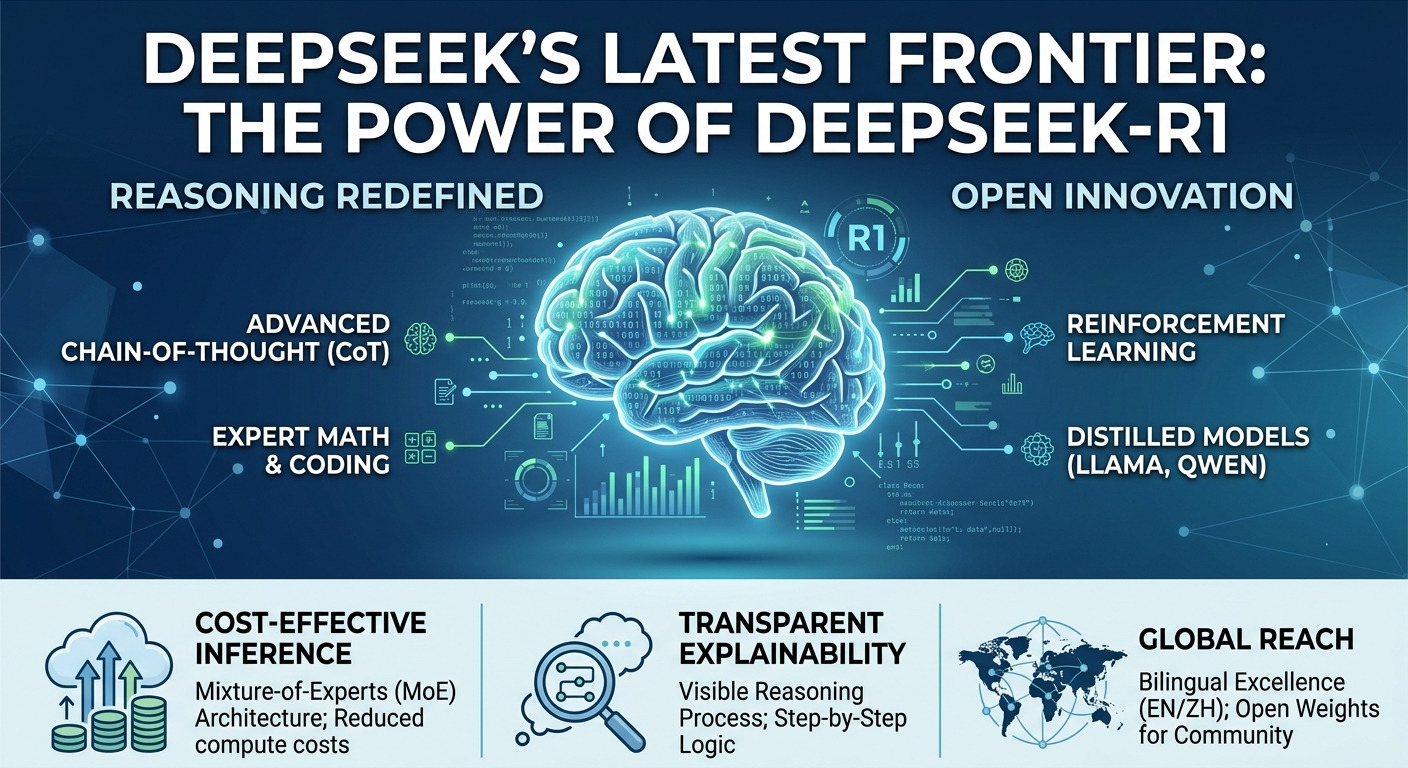
DeepSeek Redefines AI Reasoning: A Game-Changer in Open-Source Intelligence
DeepSeek-V4.1-Flash, released in September 2026, is the newest flagship version from DeepSeek. Built on DeepSeek's efficient architecture, V4.1 Flash offers faster inference speeds, reduced deployment costs, and performance that exceeds previous iterations.
AI & Emerging Tech